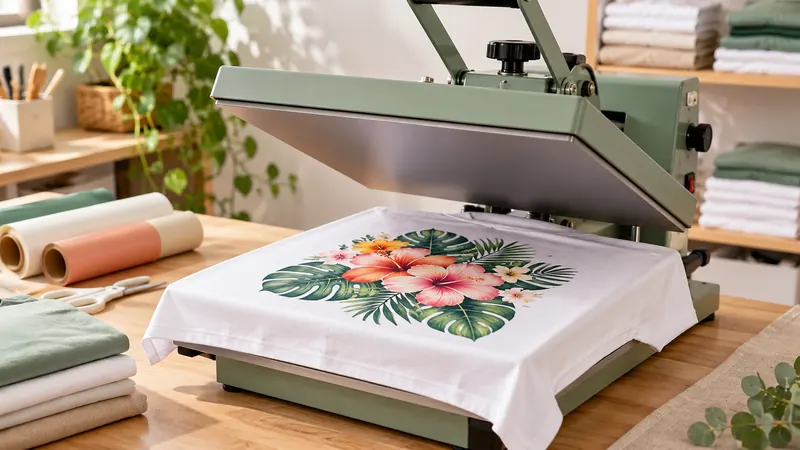
Sublimation and vinyl ask a heat press to do two different jobs, so a machine that looks suitable for one transfer method may feel limiting with the other. Sublimation projects call for controlled temperature and timed pressing across a flat surface, while vinyl work often benefits from dependable pressure adjustment and enough room to position shirts, totes, and other blanks. The best heat press for sublimation and vinyl needs a useful balance of pressing area, controls, transfer compatibility, and operating style.
A common mistake is choosing by maximum temperature, wattage, or marketing language alone. Those details do not prove temperature accuracy, even heating, or better transfer results. The supplied models range from automatic 15×15 presses to a large 16×24 clamshell and compact 10×10 and 12×10 machines. Different buyers will value different features. A small project table may favor a compact press, while someone working with larger apparel designs may need more pressing area. For the broadest mix of sublimation and vinyl work, the HTVRONT Auto Heat Press 2 is the strongest overall fit because it combines a 15×15 format, adjustable pressure, automatic pressing and release, and stated clearance up to 1.77 inches.
Look closely at the mechanism before choosing. Automatic models handle the pressing cycle differently from the manual Fancierstudio, while the VEVOR 2-in-1 adds a curved cap platen that changes its usefulness for hats. The compact HTVRONT H10 models bring pressure displays and smaller working areas, and the VEVOR 16×24 gives large designs more room but requires more workspace. Those distinctions matter far more than a long feature list, especially when the same press may be used for both sublimation blanks and heat-transfer vinyl.
Quick Answer
- Best Overall: HTVRONT Auto Heat Press 2 for adjustable pressure, automatic pressing and release, and a 15×15 format.
- Best for Hats: VEVOR 2-in-1 Heat Press Machine for its 15×15 flat platen and listed curved cap platen.
- Best Large-Platen Option: VEVOR 16×24 Heat Press Machine for larger apparel and transfer layouts.
- Best Compact Option: HTVRONT H10 12×10 Heat Press for a pressure display and a smaller footprint than the full-size machines.
Best Heat Press for Sublimation and Vinyl Comparison Table
| Product | Best For | Press Type | Pressing Area | Temperature Control | Pressure / Workflow Feature |
|---|---|---|---|---|---|
| HTVRONT Auto Heat Press 2 | Overall sublimation and vinyl work | Automatic, slide-out | 15×15 | Up to 410°F stated | Adjustable pressure, automatic release |
| HTVRONT Auto Heat Press Machine | Automatic apparel pressing | Automatic, slide-out | 15×15 | Up to 410°F stated | Automatic thickness adjustment up to 1 inch |
| HTVRONT Auto Heat Press with Auto Release | Preset-based pressing cycles | Automatic, slide-out | 15×15 | Up to 410°F stated | Four fast modes, two custom modes |
| VEVOR 2-in-1 Heat Press Machine | Shirts and hats | Swing-away, 2-in-1 | 15×15 flat platen | Digital temperature and time control | 6×3 curved cap platen |
| VEVOR 16×24 Heat Press Machine | Large transfers | Clamshell | 16×24 | 0 to 570°F, stated | Adjustable pressure knob |
| Fancierstudio Digital Heat Press | Manual 15×15 pressing | Manual | 15×15 | 0 to 699°F, stated | Adjustable pressure, 110V and 1800W |
| HTVRONT H10 12×10 Heat Press | Larger compact projects | Manual handheld-style format | 12×10 | Digital temperature and time display | Real-time pressure display |
| HTVRONT H10 V2 10×10 Heat Press | Compact craft projects | Manual handheld-style format | 10×10 | Digital temperature and time display | Real-time pressure display |
| HTVRONT 15×15 Auto Heat Press | Automatic shirt and tote pressing | Automatic, slide-out | 15×15 | Up to 410°F stated | Automatic pressure adjustment up to 1 inch thickness |
The detailed reviews below explain how each press handles the balance between sublimation, vinyl, pressing area, pressure control, and machine format.
1. HTVRONT Auto Heat Press 2 — Best Overall

The HTVRONT Auto Heat Press 2 has the most complete feature match for buyers moving between sublimation blanks and vinyl apparel. Its 15×15 pressing area gives a familiar full-size working format, while the adjustable pressure system is listed up to 80 kilograms, or 170 pounds. That pressure adjustment matters mechanically because different project thicknesses can be set differently rather than treated as identical.
Its automatic cycle begins after the user sets the parameters and presses the start button. The machine then presses the design, sounds when the timed cycle ends, and releases the material. The published clearance reaches 4.5 centimeters, or 1.77 inches, which gives this model a stated allowance for thicker items such as hoodies. The adjustable screen angle and 15-minute auto-off add useful control details, while the product information states that it reaches 410°F in 5 minutes and 30 seconds. That figure is a published claim, not independent testing.
Pros
- Provides a stated 15×15 pressing area.
- Offers adjustable pressure up to 80 kilograms, or 170 pounds, according to the listing.
- Automatically presses and releases after the timed cycle.
- Lists clearance up to 4.5 centimeters, or 1.77 inches.
- Includes an adjustable screen angle and 15-minute auto-off feature.
Cons
- The published information does not provide an independently measured temperature-accuracy tolerance.
- The 15×15 area is smaller than the 16×24 surface on the VEVOR large-platen model.
This is the strongest fit for buyers who want one flat press for sublimation and vinyl with automatic operation and adjustable pressure. The VEVOR 16×24 is a better match for very large layouts, while the compact HTVRONT models take up less pressing area and use a different operating format.
To buy this product, click here.
2. HTVRONT Auto Heat Press Machine — Best Automatic Thickness Adjustment

This HTVRONT model uses a slide-out pressing board, so the garment or blank can be positioned on the lower surface before it moves into the machine. Once the project is loaded, the listed operating sequence requires the user to push the board inside and press the “R” button. The press then adjusts to project thickness up to 1 inch and releases after the timer finishes.
The 15×15 format suits standard shirt-sized layouts and many flat sublimation blanks, while four fast modes, two custom modes, and an automatic mode give the controller several ways to store or select settings. The listing states that the machine can reach 320°F in four minutes and 410°F with a stated time saving compared with other automatic presses. Those are published performance claims. It also lists compatibility with apparel, totes, wood signs, and ceramic coasters up to 1 inch thick.
Pros
- Uses a stated 15×15 pressing area.
- Automatically adjusts to project thickness up to 1 inch, according to the listing.
- Provides a slide-out board for loading the project.
- Offers four fast modes, two custom modes, and an automatic mode.
- Lists a 15-minute automatic shutoff.
Cons
- The supplied information does not identify a numeric pressure range.
- The published specifications do not state the machine’s overall footprint or weight.
This model suits users who want a full-size automatic press with thickness adjustment and preset-style controls. The Auto Heat Press 2 provides more clearly specified pressure customization, while a manual model may appeal to buyers who want direct control over each pressing movement.
To buy this product, click here.
3. HTVRONT Heat Press Machine for T-Shirts — Best Preset-Based Automatic Option

This 15×15 HTVRONT shares the automatic press format found in the other full-size models, including automatic release and thickness recognition up to 1 inch. Its distinction in the supplied information is the combination of four fast modes, two user-defined modes, and an automatic mode. That arrangement gives a buyer several ways to handle recurring sublimation or vinyl settings without relying on a fully manual closing process.
The drawer-style placement board changes loading compared with a standard top-down press. The listing also identifies H-Cooling technology and multilayer insulation, plus a side handle positioned away from the hot area. These are specific construction and operating details, not guarantees that a hot machine can be left unattended. The product information states that the press reaches 320°F in four minutes and 410°F with a claimed reduction in warm-up time compared with other automatic models.
Pros
- Provides a stated 15×15 pressing area.
- Automatically releases the project after the timed cycle.
- Lists automatic thickness adjustment up to 1 inch.
- Includes four fast modes and two custom modes.
- Uses a slide-out placement board and 15-minute auto shutoff.
Cons
- The listing does not state an independently verified temperature tolerance.
- It does not include a curved cap platen in the supplied product information.
This is a useful choice for flat sublimation and vinyl work where preset-style controls matter. The VEVOR 2-in-1 is better suited to buyers who also need a supported hat attachment, while the HTVRONT Auto Heat Press 2 offers more explicit pressure customization.
To buy this product, click here.
4. VEVOR 2-in-1 Heat Press Machine — Best for Shirts and Hats
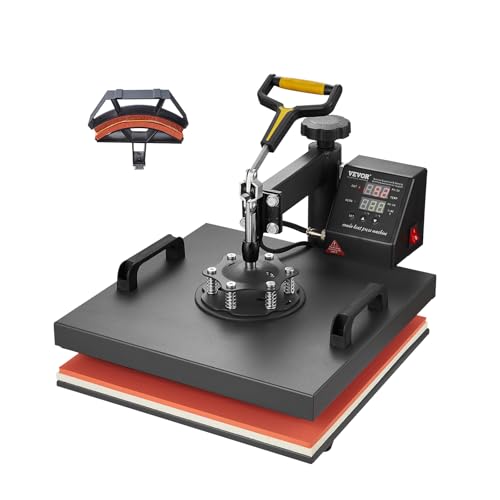
The VEVOR 2-in-1 changes the buying decision by combining a 15×15 flat platen with a listed 6×3 curved cap platen. That makes it distinct from the flat-only models in this roundup. The supplied information identifies the machine for shirts, pillows, bags, phone cases, caps, and hats, although individual blank compatibility still depends on the shape and instructions for the item being pressed.
Its 360-degree swing-away design rotates the upper section away from the loading area, while the control panel handles temperature and time. A completion alarm signals the end of the cycle. The product information also identifies silica-gel and sponge materials in the heating pads, a soft heating liner, and a Teflon coating. Those details describe the supplied construction and surface treatment. They do not establish a measured heat-uniformity result.
Pros
- Combines a stated 15×15 flat platen with a 6×3 curved cap platen.
- Uses a 360-degree swing-away mechanism.
- Provides digital temperature and time controls.
- Lists shirts, bags, pillows, phone cases, caps, and hats as applications.
- Includes a completion alarm and Teflon-coated platen.
Cons
- The supplied information does not identify a numeric pressure range.
- The flat platen is smaller than the VEVOR 16×24 model’s stated surface.
This model is the clearest fit for buyers who want sublimation and vinyl capability across flat apparel and listed cap applications. A flat automatic HTVRONT is a better match for hands-free pressing, while the VEVOR’s swing-away and curved platen make it the more relevant pick for hats.
To buy this product, click here.
5. VEVOR 16×24 Heat Press Machine — Best Large-Platen Option

The VEVOR 16×24 is the largest flat pressing format in this group, giving it a clear role for larger apparel layouts and transfer sheets. A 16×24 surface provides more stated working area than the 15×15 presses, although the product information does not establish the exact usable heated area beyond the listed dimensions.
This is a clamshell press with digital time and temperature controls, an adjustable pressure knob, and an alarm at the end of the timed cycle. The listing gives a temperature range of 0 to 570°F, a time range of 0 to 999 seconds, 1700W power, and 110V voltage. It also lists use with T-shirts, pillows, bags, phone shells, and several textile and craft materials. Those application statements describe the published listing, not a guarantee for every blank or transfer.
Pros
- Provides a stated 16×24 pressing area.
- Uses a clamshell opening format.
- Lists a 0 to 570°F temperature range.
- Provides 0 to 999 seconds of stated time control.
- Includes an adjustable pressure knob and 110V, 1700W specifications.
Cons
- The larger pressing format requires more workspace than the compact models.
- The supplied information does not identify automatic pressing or automatic release.
This is the sensible choice for buyers who need the extra area for broad sublimation or vinyl layouts and prefer a manual clamshell workflow. The 15×15 automatic models offer more automation, while the VEVOR 2-in-1 is the better fit for supported hat work.
To buy this product, click here.
6. Fancierstudio Digital Heat Press — Best Manual 15×15 Option
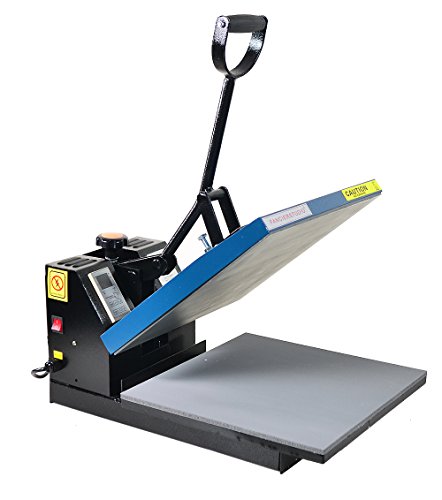
The Fancierstudio provides a straightforward 15×15 format for buyers who prefer a manual press rather than automatic closing and release. Its electronic controls cover time and heat, and the supplied information identifies adjustable pressure. That combination addresses the basic control points needed for flat sublimation and vinyl projects without adding a cap attachment or automatic cycle.
The listed specifications include 110V voltage, 1800W power, a temperature range from 0 to 699°F, and a time range from 0 to 999 seconds. It also includes a silicon-gel base board and a Teflon-coated heat platen. A broad set temperature range does not prove accuracy across the platen, so buyers should still follow the instructions for the chosen transfer and blank.
Pros
- Provides a stated 15×15 pressing area.
- Includes electronic heat and time controls.
- Offers adjustable pressure.
- Lists 110V and 1800W electrical specifications.
- Includes a silicon-gel base board and Teflon-coated platen.
Cons
- The supplied information does not identify automatic opening or release.
- The published specifications do not state a temperature-accuracy tolerance.
This model suits buyers who want a manual 15×15 press with broad stated temperature and timer ranges. Automatic HTVRONT models are a closer match for hands-free cycles, while the VEVOR 16×24 offers more pressing area for larger designs.
To buy this product, click here.
7. HTVRONT H10 12×10 Heat Press — Best Compact Option for Larger Designs

The H10 12×10 gives compact buyers a little more pressing area than the 10×10 model while keeping the same general pressure-display concept. Its digital screen shows pressure, time, and temperature, and the built-in pressure sensor is described as monitoring pressure in real time. That display can give the operator a visible reference during pressing, although the listing does not provide a pressure-accuracy tolerance.
The 12×10 surface is listed for T-shirts, hoodies, pillows, bags, and home décor projects. The supplied heating system includes an aluminum heat plate and ceramic coating, with a stated rise to 212°F in the first minute. This is a published claim, not an independent measurement. The unit also includes dual handles, an audible completion beep, an insulated safety base, and 15-minute auto shutoff.
Pros
- Provides a stated 12×10 pressing area.
- Displays pressure, time, and temperature on the digital screen.
- Lists use with T-shirts, hoodies, pillows, bags, and home décor projects.
- Includes dual handles and an audible completion beep.
- Provides a 15-minute automatic shutoff.
Cons
- The 12×10 surface is smaller than the 15×15 and 16×24 flat presses.
- The published information does not identify automatic pressing or release.
This is a practical match for smaller sublimation and vinyl work where pressure visibility matters and a full-size press is unnecessary. The 10×10 HTVRONT takes up a smaller stated pressing area, while the full-size models are better for broad shirt graphics.
To buy this product, click here.
8. HTVRONT H10 V2 10×10 Heat Press — Best Compact Craft Format

The H10 V2 uses a 10×10 pressing area and a compact format for smaller sublimation and vinyl projects. Its pressure display shows pressure data alongside time and temperature, while the dual-handle design gives the operator two grip points for closing the press. The supplied information calls the unit suitable for beginners and experienced crafters, but the concrete distinction is its smaller format and visible pressure readout.
The product listing states that the aluminum heat plate reaches 212°F in the first minute and uses a ceramic coating. It also includes a timer, audible completion signal, insulated safety base, and 15-minute auto shutoff. The listed capabilities support smaller apparel graphics and craft projects, but the 10×10 surface may require repositioning for designs wider than the available area.
Pros
- Provides a stated 10×10 pressing area.
- Displays pressure, temperature, and time.
- Uses a dual-handle design.
- Includes a timer and audible completion signal.
- Provides an insulated safety base and 15-minute auto shutoff.
Cons
- The 10×10 area is the smallest flat pressing surface among the selected full and compact presses.
- The supplied information does not identify automatic pressing or release.
This model fits smaller vinyl graphics, compact sublimation blanks, and buyers who prioritize a reduced pressing area with pressure display. The 12×10 version gives more room, while a 15×15 or 16×24 press is better for larger apparel layouts.
To buy this product, click here.
9. HTVRONT 15×15 Auto Heat Press — Best for Automatic Shirt and Tote Pressing

This HTVRONT model uses a 15×15 tray-style format with automatic pressing and release. The operating sequence described in the listing is specific: place the project on the tray, set time and temperature, push the tray completely into the machine, and press the “R” button. The press then adjusts to the project thickness up to 1 inch and rises automatically when the timer ends.
Its four fast modes, two custom modes, and automatic mode give it a controls-focused workflow for flat heat-transfer projects. The listing states that it reaches 320°F in four minutes and 410°F with a claimed time saving compared with other automatic presses. It also identifies H-Cooling technology, multilayer insulation, a side handle, and a one-year warranty. The warranty statement applies to this supplied model and should not be transferred to the other HTVRONT listings.
Pros
- Provides a stated 15×15 pressing area.
- Automatically adjusts to project thickness up to 1 inch, according to the listing.
- Automatically releases and rises at the end of the timed cycle.
- Includes four fast modes, two custom modes, and an automatic mode.
- Lists a one-year warranty and 15-minute auto shutoff.
Cons
- The supplied information does not identify a numeric adjustable pressure range.
- The 15×15 surface provides less stated area than the VEVOR 16×24.
This press suits buyers who want automatic flat pressing for shirts, totes, and similar projects and who value the listed warranty. The Auto Heat Press 2 is a stronger overall fit for buyers who specifically need documented pressure customization, while the VEVOR 2-in-1 adds a supported cap platen.
To buy this product, click here.
Buying Guide
Choose the Pressing Area Around Your Designs
A 15×15 press provides a common flat format for shirt fronts, totes, and many sublimation blanks. The VEVOR 16×24 offers a larger stated surface, which may reduce the need to reposition a broad design, but the listing does not provide its overall footprint. Compact 12×10 and 10×10 presses suit smaller layouts, though large graphics may not fit in one placement.
Separate Temperature Range From Temperature Accuracy
A temperature range tells you what the controller is designed to set. It does not prove that the platen reaches that setting uniformly or within a particular tolerance. The Fancierstudio lists 0 to 699°F, the VEVOR 16×24 lists 0 to 570°F, and several HTVRONT models list operation up to 410°F. Follow the transfer and blank instructions rather than treating the highest number as a quality score.
Understand Automatic Pressing
The HTVRONT automatic models describe automatic pressing, thickness adjustment, and release. That means the machine handles those specific parts of the cycle after the user loads the project and starts the press. It does not establish labor savings, faster production, or verified pressure consistency. Buyers who prefer direct manual control may favor the Fancierstudio or VEVOR clamshell.
Look at Pressure Controls
Pressure adjustment appears in different forms across this group. The HTVRONT Auto Heat Press 2 lists adjustment up to 80 kilograms, or 170 pounds. The Fancierstudio and VEVOR 16×24 list adjustable pressure without a numeric range. The compact H10 models display pressure data. These are different functions, so a pressure display should not be treated as a verified pressure measurement or as equivalent to a pressure-adjustment knob.
Match the Mechanism to Your Loading Preference
A slide-out board gives the automatic HTVRONT models a different loading arrangement from the VEVOR clamshell. The VEVOR 2-in-1 uses a 360-degree swing-away structure, while the VEVOR 16×24 uses a clamshell format. None of these mechanisms should be treated as universally better. The useful question is whether you prefer a tray, swing-away upper section, or conventional clamshell movement.
Check Specialty Attachments Carefully
The VEVOR 2-in-1 is the only selected model with a listed curved cap platen, sized 6×3 inches, alongside its 15×15 flat platen. That supports a different buying purpose from a flat-only press. A flat press should not be assumed to handle hats, and a curved cap platen should not be treated as proof of compatibility with every hat shape.
Review Electrical and Workspace Details
The Fancierstudio lists 110V and 1800W, while the VEVOR 16×24 lists 110V and 1700W. Those figures describe electrical specifications, not guaranteed warm-up speed or production capacity. The larger 16×24 format also deserves a workspace check before purchase. For the other models, the supplied information does not clearly identify a full machine footprint or weight.
Best Heat Press for Sublimation and Vinyl FAQ
Can the same heat press handle sublimation and vinyl?
A flat heat press can be used for both processes when the press and the chosen materials are listed as compatible. The transfer method, blank, temperature, time, and pressure still need to follow the instructions for that specific transfer system. A press’s maximum temperature alone does not prove suitability for every sublimation or vinyl product.
Is a 15×15 press large enough for T-shirts?
A stated 15×15 pressing area provides a substantial flat work surface for many shirt designs, but the actual layout must fit within the usable area. Larger graphics may call for a 16×24 machine or careful repositioning. Nominal platen dimensions should not be treated as a guarantee that every design will fit in one press.
Is automatic pressing better than a manual heat press?
Automatic and manual presses suit different operating preferences. The HTVRONT automatic models press and release after the user starts the cycle, while the Fancierstudio and VEVOR manual formats leave more of the physical operation to the user. Automatic operation does not independently prove higher output, better pressure consistency, or better transfer quality.
Which press is suitable for hats?
The VEVOR 2-in-1 is the relevant selection here because its supplied information lists a 6×3 curved cap platen alongside a 15×15 flat platen. The other selected models are described primarily as flat presses. Hat compatibility still depends on the shape of the specific cap and the instructions supplied for the blank.
Does a higher temperature rating make a heat press better for sublimation?
No. A higher listed temperature range only describes the controller’s stated range. It does not prove temperature accuracy, uniformity, recovery behavior, or better sublimation results. The transfer manufacturer’s instructions and the blank’s requirements should guide the settings.
What does a pressure display tell you?
The compact HTVRONT H10 models list a display for pressure, time, and temperature. That gives the operator pressure data during use according to the product information. It does not establish a tested pressure-accuracy tolerance, and it is different from a machine that lists a mechanical pressure-adjustment range.
Is a clamshell or swing-away press better for vinyl?
Both formats can be relevant to vinyl work when their controls and pressing area suit the project. The VEVOR 16×24 uses a clamshell design, while the VEVOR 2-in-1 uses a 360-degree swing-away design. The supplied information does not establish that either mechanism universally produces better vinyl adhesion.
Final Verdict
The HTVRONT Auto Heat Press 2 is the strongest overall match for sublimation and vinyl because its supplied specifications combine a 15×15 format, adjustable pressure up to 80 kilograms, automatic pressing and release, and stated clearance up to 1.77 inches. Those features address the central needs of buyers who want one flat press for apparel and other heat-transfer projects, while the automatic cycle separates it from the manual alternatives.
Buyers with large layouts should look closely at the VEVOR 16×24, which provides the largest stated pressing area in this group. The VEVOR 2-in-1 is the meaningful alternative for listed hat work because it includes a curved cap platen. For smaller projects, the HTVRONT H10 12×10 and 10×10 models provide pressure displays in compact formats. The best final choice rests on the working area, mechanism, pressure controls, and supported applications that match the projects you actually plan to press.
