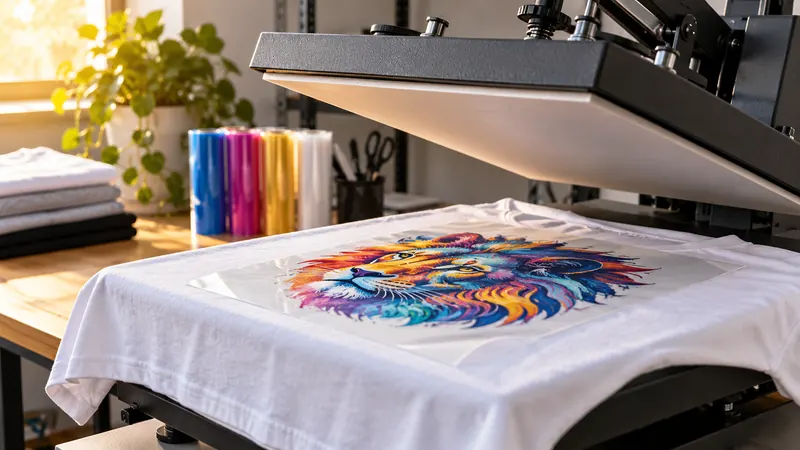
DTF transfers and sublimation both depend on controlled heat and pressure, yet they place different demands on a press. A flat 15×15 machine gives room for shirt designs, while a smaller 10×10 model may suit compact work areas. A curved hat press solves a completely different problem. The awkward moment comes when a press looks capable on paper but its controls, pressing area, or included attachments do not match the projects on your table.
Common mistakes include treating maximum temperature as proof of accuracy, assuming every automatic machine applies pressure in the same way, and overlooking the difference between a flat platen and a curved hat form. For DTF, adjustable pressure and a practical working area matter. For sublimation, the controller must provide a usable temperature range and timer. The best overall fit here is the HTVRONT Auto Heat Press 2 because its 15×15 format, adjustable pressure, automatic pressing and release, and increased clearance cover the broadest range of flat-transfer work supported by the supplied specifications.
Different buyers will still have different priorities. A manual swing-away press offers a different loading arrangement, a multifunction model adds mug and hat attachments, and the dedicated HTVRONT hat press belongs in a separate category altogether. The options below are ranked by supported features, application fit, and meaningful mechanical differences rather than by wattage or marketing language.
Quick Answer
- Best Overall: HTVRONT Auto Heat Press 2 for a 15×15 flat press with adjustable pressure, automatic operation, and added clearance.
- Best Manual Swing-Away: HTVRONT 15×15 Heat Press Machine for buyers who want a 180-degree swing-away platen and manual pressure adjustment.
- Best With Attachments: HTVRONT 3-in-1 Auto Heat Press for flat projects plus the supplied mug and hat attachments.
- Best for Hats: HTVRONT Auto Hat Press for curved cap work with two listed hat platens.
Best Heat Press for DTF and Sublimation Comparison Table
| Product | Best For | Press Type | Pressing Area or Form | Temperature Control | Pressure or Workflow Feature |
|---|---|---|---|---|---|
| HTVRONT Auto Heat Press 2 | DTF and sublimation apparel | Automatic flat press | 15×15 | Up to 410°F, listed heat-up claim | Adjustable pressure up to 80 kg, auto press and release |
| HTVRONT Auto Heat Press 15×15 | Hands-free flat pressing | Automatic flat press | 15×15 | Up to 410°F, listed heat-up claim | Automatic thickness detection and release |
| Fancierstudio Digital Heat Press | Manual DTF and sublimation work | Digital flat press | 15×15 | 0°F to 699°F stated range | Adjustable pressure, electronic time and heat control |
| HTVRONT 3-in-1 Auto Heat Press | Flat work plus mugs and hats | Automatic multifunction press | 12×10 flat area | 104°F to 410°F stated range | Adjustable pressure up to 80 kg, mug and hat attachments |
| HTVRONT 15×15 Heat Press Machine | Manual shirt and apparel pressing | Manual swing-away flat press | 15×15 | 104°F to 410°F stated range | Pressure knob and 180-degree swing-away platen |
| Calogy Mini Heat Press | Small craft areas | Mini handheld-style press | 2.87×4.43 heat plate | 284°F, 320°F, and 356°F settings | Three temperature levels and auto-off |
| HTVRONT 10×10 Heat Press | Compact flat projects | Manual flat press | 10×10 | Digital temperature control | Real-time pressure display and timer |
| HTVRONT Auto Hat Press | Caps and curved hat projects | Automatic hat press | Two listed hat platens | 104°F to 410°F, 1 to 999 seconds | Over 80 kg stated pressure, one-touch operation |
| TransOurDream PTFE Sheets | Protecting a 15×15 press | Press accessory | 16×20 sheets | Rated to 600°F | Reusable, washable, and cuttable |
The detailed reviews explain where each machine or related accessory fits, along with the limitations that matter for DTF and sublimation work.
1. HTVRONT Auto Heat Press 2: Best Overall

The HTVRONT Auto Heat Press 2 has the broadest flat-press feature set in this group. Its stated 15×15 pressing area gives room for common shirt designs, while the adjustable pressure system is specified up to 80 kg, or 170 lb. That pressure control is especially relevant for DTF work, where the transfer process may call for more deliberate adjustment than a fixed manual lever provides. The listing also identifies clearance up to 4.5 cm, or 1.77 inches, which gives the machine a stated range beyond thin shirt panels.
Operation is built around a timed automatic cycle. After the settings are entered, pressing begins with the R button, and the machine releases the material when the cycle ends. The screen angle can be adjusted through seven positions from 0 to 75 degrees, and the machine includes an auto-off function after 15 minutes of inactivity. The listing states that it reaches 410°F within 5 minutes and 30 seconds, though that is a published claim rather than an independent measurement. For a buyer seeking one flat press that separates pressure adjustment from temperature and timer controls, this is the most complete match.
Pros
- Provides a stated 15×15 pressing area.
- Offers adjustable pressure up to 80 kg, or 170 lb, according to the listing.
- Automatically presses and releases after the programmed cycle.
- Provides stated clearance up to 4.5 cm, or 1.77 inches.
- Includes an adjustable screen angle and 15-minute auto-off feature.
Cons
- The published information does not identify a measured temperature-accuracy tolerance.
- The automatic format provides less direct manual control than the swing-away HTVRONT model.
This model suits buyers prioritizing a full-size flat platen, adjustable pressure, and automatic release for DTF or sublimation apparel. The manual swing-away press may fit better if direct loading access matters more than automation, while the multifunction model is the better match for buyers who need listed mug and hat attachments.
To buy this product, click here.
2. HTVRONT Heat Press Machine for Tshirts 15×15: Best Automatic Flat Press

This HTVRONT model takes a different route to automatic operation. The listing describes automatic thickness detection for items up to 1 inch thick, followed by automatic pressure control and release. That makes the mechanical sequence distinct from a conventional lever press, where the operator closes and opens the platen manually. Its 15×15 format keeps it relevant for shirt fronts, totes, and other flat projects listed by the manufacturer.
The control layout includes four fast modes, two customizable modes, and an automatic mode. The product information states that the press can reach 320°F in around four minutes and 410°F in a shorter period than other automatic presses, but these figures remain published claims. A drawer-slide placement plate changes how the item is loaded, and the listing also mentions compatibility with wood signs and ceramic coasters up to 1 inch thick. That combination gives this model a broad application description, though the separate Auto Heat Press 2 offers clearer pressure customization.
Pros
- Provides a stated 15×15 pressing area.
- Uses automatic thickness detection for items up to 1 inch thick, according to the listing.
- Automatically controls the pressing cycle and releases the item.
- Includes four fast modes, two custom modes, and an automatic mode.
- Lists applications including apparel, wood signs, and ceramic coasters.
Cons
- The published information does not state a numeric adjustable pressure range.
- The listing describes the placement plate as drawer-slide style, but does not provide a machine footprint or weight.
This is a sensible fit for buyers who want a 15×15 automatic press with preset-style controls and thickness detection. The Auto Heat Press 2 is a better match for users who specifically want a stated pressure figure and higher clearance, while the manual HTVRONT gives more direct control over loading and closing.
To buy this product, click here.
3. Fancierstudio Digital Heat Press 15 x 15: Best Broad Temperature Range
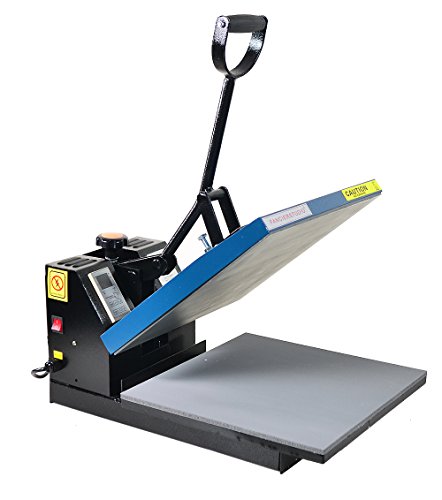
Fancierstudio keeps the format familiar: a 15×15 flat pressing area, electronic time and heat controls, and adjustable pressure. The supplied specifications identify a 110-volt, 1800-watt machine with a stated temperature range from 0°F to 699°F and a timer range from 0 to 999 seconds. Those figures give the controller a wider published range than several alternatives here, although they do not establish temperature accuracy or surface uniformity.
The machine includes a silicone-gel base board and a Teflon-coated heat platen. Those details describe the supplied construction and contact surfaces, but they should not be treated as proof of even heating or guaranteed transfer results. For a buyer who prefers a straightforward digital press rather than automatic release, the appeal is the combination of a full 15×15 area, adjustable pressure, and broad stated time and temperature controls.
Pros
- Provides a stated 15×15 pressing area.
- Lists electronic time and heat controls.
- Provides adjustable pressure.
- Specifies 110 volts and 1800 watts.
- Lists a 0°F to 699°F temperature range and 0 to 999 seconds of time control.
Cons
- The published information does not identify the opening mechanism.
- The specifications do not state temperature accuracy or heat distribution.
This press suits buyers who want manual pressure adjustment and a broad listed controller range in a 15×15 format. The automatic HTVRONT models add automatic pressing or release, while the swing-away HTVRONT provides a clearly stated platen movement that this listing does not identify.
To buy this product, click here.
4. HTVRONT 3-in-1 Auto Heat Press: Best With Attachments

The 3-in-1 HTVRONT is the most application-diverse machine in this selection, but its flat pressing area is smaller at 12×10 inches. The supplied package includes dedicated mug and hat attachments, so it can address listed flat, mug, and hat projects without requiring three separate machines. The attachment system is described as a quick-swap design, and the product information instructs users to wear the included heat-resistant gloves when changing attachments.
For flat DTF work, the listing identifies pressure adjustment up to 80 kg, or 170 lb, plus a pressure display. It also describes automatic operation and a 15-minute auto-off function. The important trade-off is geometry. A 12×10 flat area offers less room than the 15×15 presses above, while the listed mug and hat attachments add functions the flat models do not provide. Buyers should match the attachment package to actual projects rather than treating attachment count as a quality rating.
Pros
- Includes dedicated mug and hat attachments according to the listing.
- Provides a stated 12×10 flat pressing area.
- Offers adjustable pressure up to 80 kg, or 170 lb.
- Includes a pressure display for the pressing cycle.
- Provides automatic operation and a 15-minute auto-off function.
Cons
- The flat pressing area is smaller than the 15×15 models in this roundup.
- The supplied information does not specify the compatible mug sizes or hat styles.
This model makes sense for buyers whose projects genuinely include flat transfers, mugs, and hats. A 15×15 flat press is better for larger apparel artwork, while the dedicated HTVRONT hat press is the more focused choice for repeated curved-cap work.
To buy this product, click here.
5. HTVRONT 15×15 Heat Press Machine: Best Manual Swing-Away

This manual HTVRONT model is defined by its 180-degree swing-away heat platen and pressure knob. The swing-away movement changes the loading position by moving the heated upper plate away from the lower area, while the pressure knob lets the operator adjust the fit for different material thicknesses. Those are concrete mechanical differences from the automatic drawer-style and auto-release presses above.
The listing states a temperature range of 104°F to 410°F, 1500 watts of power, and a separate display control pad connected by a 1-meter cable. It also lists a 15-minute auto-shutoff and FCC certification. The published description claims uniform performance from edge to edge, but that is a seller claim rather than an independent measurement. For DTF and sublimation, this machine offers the familiar 15×15 format with manual control and a clearly identified swing-away layout.
Pros
- Provides a stated 15×15 pressing area.
- Uses a 180-degree swing-away heat platen.
- Includes a pressure adjustment knob.
- Lists a 104°F to 410°F temperature range.
- Includes a separate display control pad and 15-minute auto-shutoff.
Cons
- Pressing and release are manual rather than automatic.
- The published specifications do not identify a numeric pressure range.
This is the better fit for buyers who want manual control and swing-away loading in a full-size flat format. The automatic HTVRONT models suit buyers who prefer programmed release, while the Fancierstudio offers a broader stated controller range.
To buy this product, click here.
6. Calogy Mini Heat Press: Best for Small Detail Areas

The Calogy is a specialist tool rather than a replacement for a 15×15 apparel press. Its stated machine dimensions are 4.5×2.9×5.1 inches, with a 2.87×4.43-inch heat plate. That small contact area can suit unusually small graphics, narrow sections, hats, socks, bags, and other projects identified in the listing. A one-button interface controls power, temperature changes, and the Fahrenheit or Celsius display.
Three temperature levels are listed: 284°F, 320°F, and 356°F. The product information also states that the machine reaches 284°F in around three minutes, though this is a published claim. It includes a heat-resistant base, a visible temperature display, a comfort handle, and auto-off after 15 minutes. Since the maximum listed temperature is 356°F and no DTF or sublimation-specific operating range is provided, its role is better understood as a detail press for small areas.
Pros
- Provides a stated 2.87×4.43-inch heat plate.
- Lists three temperature levels from 284°F to 356°F.
- Includes a real-time temperature display.
- Provides a heat-resistant safety base.
- Lists auto-off after 15 minutes of inactivity.
Cons
- The small heat plate does not suit large shirt-front designs.
- The supplied information does not state DTF or sublimation-specific compatibility.
Choose this press for small or awkward sections where a full platen would be excessive. For standard DTF apparel or sublimation shirt layouts, one of the 10×10 or 15×15 presses provides a more relevant working area.
To buy this product, click here.
7. HTVRONT 10×10 Heat Press: Best Compact Flat Press

The HTVRONT 10×10 offers a smaller flat pressing area than the 15×15 models, which is the defining trade-off rather than a minor detail. Its supplied information identifies a digital screen showing pressure, time, and temperature, along with a built-in pressure sensor. That display gives the operator pressure information during the cycle, though the listing does not provide a pressure-accuracy tolerance or explain how the reading is calibrated.
The machine uses a dual-handle design, an audible timer signal, and a 15-minute auto-shutoff. The listing states that the aluminum heat plate reaches 212°F in the first minute and describes the plate as heating quickly and evenly. Those are published claims, not independent measurements. For smaller DTF graphics, compact sublimation blanks, or a work surface where a 15×15 machine would be excessive, the 10×10 format offers a clearly defined alternative.
Pros
- Provides a stated 10×10 pressing area.
- Displays pressure, time, and temperature on the digital screen.
- Includes a built-in pressure sensor according to the listing.
- Provides an audible timer signal.
- Includes a 15-minute auto-shutoff and insulated safety base.
Cons
- The 10×10 pressing area is smaller than the 15×15 alternatives.
- The published information does not identify a maximum temperature or pressure-accuracy tolerance.
This model fits smaller flat designs and buyers who value displayed pressure information. The 15×15 presses are better for larger apparel artwork, while the Calogy is more suitable for small detail areas rather than standard flat pressing.
To buy this product, click here.
8. HTVRONT Auto Hat Press: Best for Hats

A dedicated hat press addresses curved-cap geometry that a flat platen does not. The HTVRONT A300 includes two listed hat platens, one for adult hats and another for smaller kids’ caps. The supplied information describes quick swapping between them and identifies applications including DTF film, embroidered patches, puff HTV, hotfix rhinestones, and sublimation paper. It does not establish compatibility with every cap brand, shape, or construction.
The machine uses one-touch automatic lowering and lifting, two customizable preset modes, and a touchscreen with a stated temperature range of 104°F to 410°F and a timer from 1 to 999 seconds. The listing also states more than 80 kg, or 176 lb, of pressure and identifies a cast-aluminum heat plate with a PTFE coating. Those are published specifications and claims. This is the clear choice for curved hat projects, while a flat press remains the more suitable format for shirt-front transfers.
Pros
- Includes two listed hat platens for adult and kids’ caps.
- Uses one-touch automatic lowering and lifting.
- Lists support for DTF film, embroidered patches, puff HTV, hotfix rhinestones, and sublimation paper.
- Provides a stated temperature range of 104°F to 410°F and timer range of 1 to 999 seconds.
- Includes two customizable preset modes.
Cons
- This is a dedicated hat press rather than a flat apparel press.
- The published information does not identify compatibility with specific cap brands or styles.
Consider this machine for curved-cap work, especially when the two listed platen sizes match the intended hats. Buyers focused on DTF or sublimation shirts should choose a flat press, while the HTVRONT 3-in-1 adds listed hat capability alongside a smaller flat platen.
To buy this product, click here.
9. TransOurDream PTFE Teflon Sheets: Best Press Protection Add-On

This product is an accessory rather than a heat press, so it should not be confused with a primary DTF or sublimation machine. The package contains four 16×20-inch PTFE sheets, a size the listing identifies as suitable for 15×15 automatic presses. The sheets are intended to sit between the platen and project materials, and the product information describes them as reusable, washable, and cuttable.
The listed temperature resistance is up to 600°F, with a smooth, nonstick surface and compatibility claims covering heat transfer, sublimation, HTV, DTF, and crafts. Those claims describe the accessory’s intended use, not a guarantee for every transfer material or substrate. Its practical role is protection and separation during pressing, especially for users whose machine is already selected and who need a cover sheet sized beyond the edges of a 15×15 area.
Pros
- Includes four stated 16×20-inch PTFE sheets.
- Lists temperature resistance up to 600°F.
- Can be cut to fit different pressing areas.
- Is described as reusable and washable.
- Lists compatibility with DTF, sublimation, HTV, and heat-transfer projects.
Cons
- This product is an accessory and cannot replace a heat press machine.
- The published information does not identify a sheet thickness or service-life rating.
This add-on belongs in the accessory section of a DTF or sublimation setup, not as an alternative to the eight machines above. Buyers still choosing a press should start with platen size, pressure control, temperature and timer controls, and press geometry before adding protective sheets.
To buy this product, click here.
Buying Guide
Start With the Pressing Format
A 15×15 flat press gives more working area than a 10×10 model, but the larger nominal size does not prove better temperature uniformity or transfer quality. Match the area to the artwork you expect to position. Shirt fronts and larger apparel graphics generally call for a full-size flat format, while small graphics can fit a 10×10 machine or a mini press.
Separate DTF and Sublimation Needs
For DTF, look for a stated pressure adjustment system, a timer, and a temperature controller. The supplied product data identifies adjustable pressure on the HTVRONT Auto Heat Press 2 and the 3-in-1 model. For sublimation, check the stated temperature range and timer rather than relying on a high maximum temperature alone. Transfer manufacturers may specify different settings for different media and blanks.
Compare Manual and Automatic Operation
Automatic presses in this selection can press and release through a programmed cycle, but automation does not establish faster production, pressure accuracy, or transfer consistency. Manual presses provide a different operating arrangement. The HTVRONT swing-away model uses a 180-degree platen movement and a pressure knob, while the Fancierstudio lists electronic time and heat control with adjustable pressure.
Look Closely at Pressure Information
Adjustable pressure is different from measured pressure. The Auto Heat Press 2 and 3-in-1 list pressure adjustment up to 80 kg, or 170 lb. The 10×10 HTVRONT lists a pressure display, but the supplied information does not provide a pressure-accuracy tolerance. A pressure knob gives adjustment without establishing a numeric force range.
Account for Specialty Geometry
A flat press and a hat press solve different positioning problems. The HTVRONT Auto Hat Press includes two listed hat platens, while the 3-in-1 model includes dedicated mug and hat attachments. The supplied information does not identify every compatible cap style or mug dimension, so check the intended blanks before treating an attachment as universally suitable.
Check the Controller and Electrical Details
Temperature ranges vary across these models. The Fancierstudio lists 0°F to 699°F, the manual HTVRONT lists 104°F to 410°F, and the Calogy lists three fixed levels up to 356°F. The Fancierstudio also identifies 110 volts and 1800 watts. These figures describe controls and electrical specifications, not measured accuracy, heat distribution, or circuit suitability beyond the stated information.
Do Not Forget Workspace and Protection
A swing-away platen needs room to move, while a drawer-style or automatic press has a different loading motion. Machine footprints and weights are not supplied for most models here, so leave space based on the operating mechanism rather than guessing from platen size. A PTFE sheet can serve as a protective layer, but it remains an accessory and does not substitute for correct transfer settings or a suitable press.
Best Heat Press for DTF and Sublimation FAQ
Can One Heat Press Handle Both DTF and Sublimation?
A flat heat press can be relevant to both processes when its temperature, timer, pressing area, and pressure controls suit the transfer instructions. Product-specific compatibility still depends on the machine and the transfer materials. The HTVRONT Auto Heat Press 2 is the strongest broad flat-press match in this selection because its listing identifies a 15×15 area, adjustable pressure, automatic operation, and a temperature setting up to 410°F.
Is a 15×15 Press Better Than a 10×10 Press?
It provides a larger stated pressing area, which can simplify positioning larger artwork. That does not prove superior heat uniformity or transfer quality. A 10×10 machine may be a better physical fit for smaller designs or a limited work surface, while a 15×15 model gives more room for common apparel layouts.
Does Automatic Operation Make a Press Better for DTF?
Automatic operation changes how the cycle starts and ends. The HTVRONT Auto Heat Press 2 automatically presses and releases after the programmed cycle. That feature does not establish labor savings, higher output, or more consistent transfers. Pressure, temperature, time, and transfer instructions still need to match the material being used.
What Pressure Features Matter for DTF?
Adjustable pressure lets the operator change the pressing force according to the task, while a pressure display reports information during operation. These are different features. The Auto Heat Press 2 lists adjustable pressure up to 80 kg, and the 10×10 HTVRONT lists a pressure display. Neither supplied description provides a verified pressure-accuracy tolerance.
Can a Flat Heat Press Be Used for Hats?
A flat platen is shaped for flat items, while a dedicated hat press uses a curved hat form or platen. The HTVRONT Auto Hat Press includes two listed hat platens, so it is the more direct choice for curved-cap work. The 3-in-1 model also lists a hat attachment, but its supplied information does not identify every compatible hat style.
Does a Higher Maximum Temperature Guarantee Better Sublimation?
No. A maximum temperature describes the controller’s stated upper setting, not actual surface accuracy, uniformity, or suitability for every sublimation blank. Use the temperature and time instructions supplied for the specific transfer and substrate, then choose a press whose published controls cover those requirements.
Is the Calogy Mini Heat Press Suitable for Full Shirt Designs?
Its stated heat plate measures 2.87×4.43 inches, so it is aimed at small or unusual areas rather than a full shirt-front design. A 10×10 or 15×15 flat press provides a larger working area for apparel transfers. The Calogy is better treated as a detail tool that can complement a larger machine.
Are PTFE Sheets Required for DTF or Sublimation?
The TransOurDream sheets are protective accessories listed for DTF, sublimation, HTV, and heat-transfer projects. Whether a sheet is required depends on the transfer manufacturer’s instructions and the press setup. A PTFE sheet does not correct unsuitable temperature, time, pressure, or substrate selection.
Final Verdict
The HTVRONT Auto Heat Press 2 is the strongest overall match for DTF and sublimation because its supplied specifications combine a 15×15 flat area with adjustable pressure up to 80 kg, automatic pressing and release, and stated clearance up to 4.5 cm. Those characteristics address the central mechanical needs of varied flat-transfer work without confusing a flat press with a specialty machine. The published temperature and heat-up claims should still be treated as listing information rather than independent measurements.
The alternatives have clearer individual roles. The manual HTVRONT is the pick for a stated 180-degree swing-away platen, the Fancierstudio offers broad listed time and temperature ranges, and the 3-in-1 HTVRONT adds mug and hat attachments while reducing flat working area to 12×10. The 10×10 HTVRONT suits smaller flat projects, the Calogy handles detail areas, and the dedicated HTVRONT Auto Hat Press is the appropriate geometry for caps. The TransOurDream sheets are useful protection for an existing setup, but they are an accessory rather than a press.
